What's up in
Biochemistry
Latest Articles
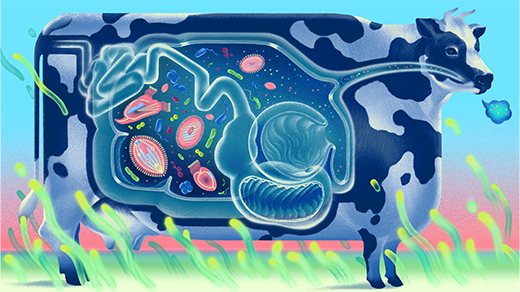
A New Way That a Cow’s Inner World Shapes Earth’s Atmosphere
An organelle discovered inside a microbe inside a cow’s gut helps explain how livestock burps contribute to warming our planet.
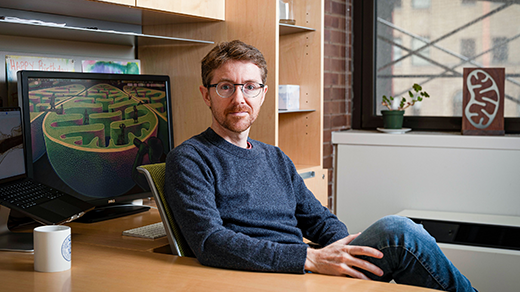
Martin Picard’s Mitochondrial Theory of Mind
The biologist’s bold “energetic view of life” looks to the body’s strangest organelles as the link between cells, health, and mind and the foundation of our experience of being alive.
The Dirt That Refused To Die
Lifelike biochemistry continued to unfold in sterilized soil for six years, pointing to a metabolic theory for how biology began.
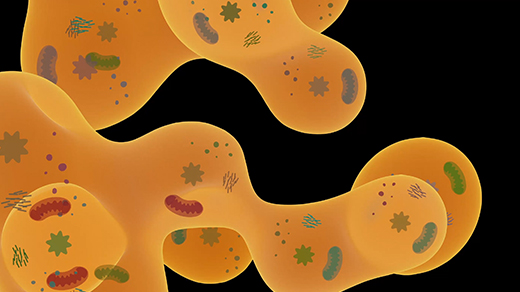
The Biophysical World Inside a Jam-Packed Cell
Innovations in imaging and genetic engineering are coming together to probe the biophysics of cytoplasm inside living animals.
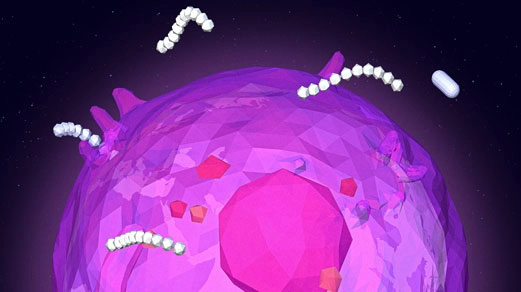
The Microbial Masters of Earth’s Climate
A collection of short dispatches from the field of climate microbiology conveys the contributions that single-celled life forms make to our climate system, and how we can work with them to address climate change.
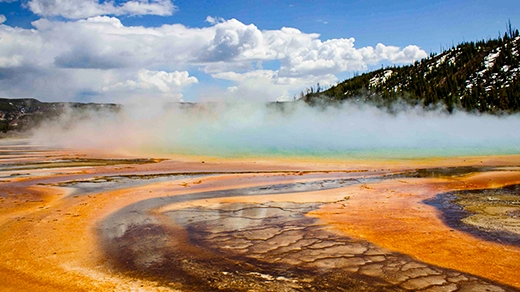
The Cells That Breathe Two Ways
In a hot spring at Yellowstone National Park, a microbe does something that life shouldn’t be able to do: It breathes oxygen and sulfur at the same time.
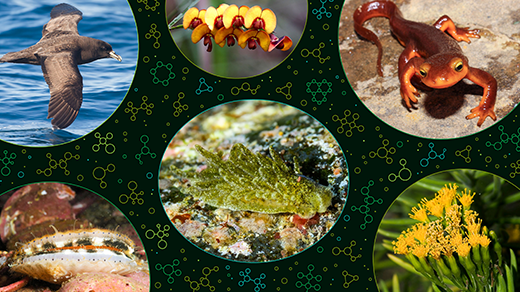
A New, Chemical View of Ecosystems
Rare and powerful compounds, known as keystone molecules, can build a web of invisible interactions among species.
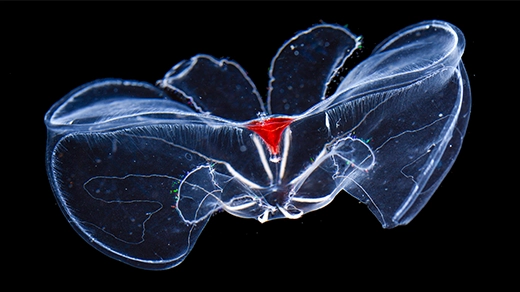
The Cellular Secret to Resisting the Pressure of the Deep Sea
Cell membranes from comb jellies reveal a new kind of adaptation to the deep sea: curvy lipids that conform to an ideal shape under pressure.
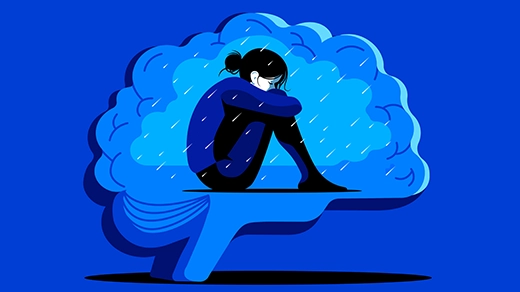
What Happens in the Brain to Cause Depression?
Drugs that target the neurotransmitter serotonin have long been prescribed to treat depression. Now the spotlight is turning to other aspects of brain chemistry. In this episode, the neuropharmacologist John Krystal shares findings that are overturning our understanding of depression.