What's up in
Phase transitions
Latest Articles
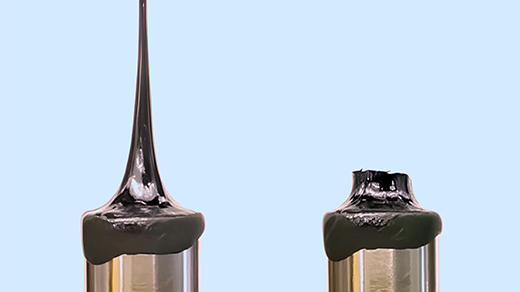
We Know Simple Fluids Can Flow. Turns Out, Some Can Fracture.
Researchers thought that what enabled complex fluids to break apart was their elasticity. But a crack in a nonelastic simple fluid has them questioning that idea.
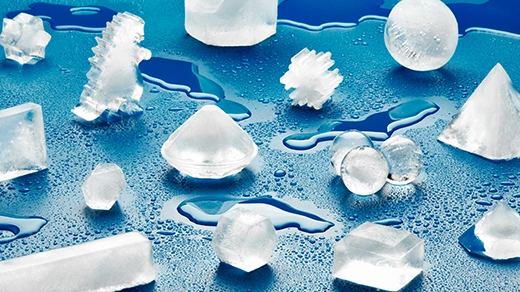
Physicists Discover the Most Complex Forms of Ice Yet
Scientists keep detecting new forms of ice. According to simulations, there could be many more left to find.
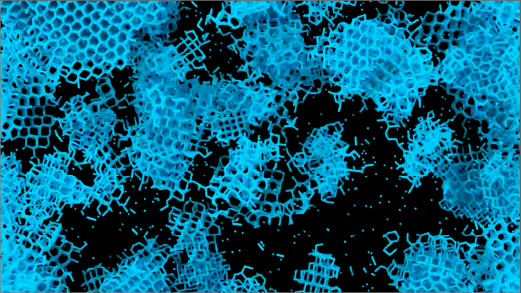
The Enduring Mystery of How Water Freezes
Making ice requires more than subzero temperatures. The unpredictable process takes microscopic scaffolding, random jiggling and often a little bit of bacteria.

Will Better Superconductors Transform the World?
Scientists are pursuing materials that can conduct electricity with perfect efficiency under ambient conditions. In this episode, the physicist Siddharth Shanker Saxena tells co-host Janna Levin about what makes this hunt so difficult and consequential.

A Quantum Trick Implied Eternal Stability. Now the Idea May Be Falling Apart.
A series of advances seemed to promise the impossible: the existence of quantum states that would never, ever fall into disarray. But physicists are now discovering that the pull of disorder may not be so easily overcome.
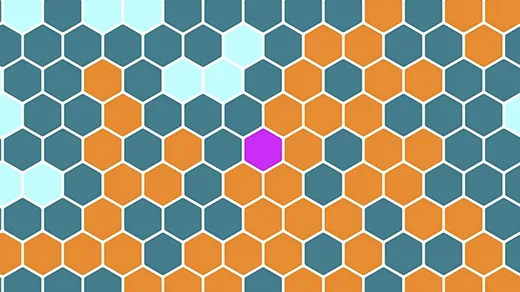
Maze Proof Establishes a ‘Backbone’ for Statistical Mechanics
Four mathematicians have estimated the chances that there’s a clear path through a random maze.
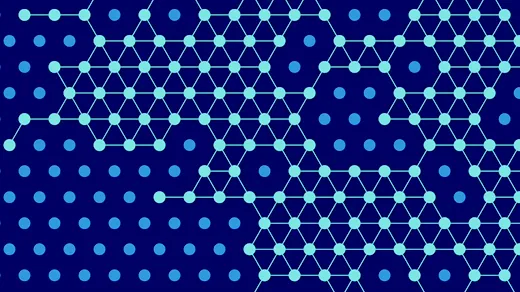
Physicists Observe ‘Unobservable’ Quantum Phase Transition
Measurement and entanglement both have a “spooky” nonlocal flavor to them. Now physicists are harnessing that nonlocality to probe the spread of quantum information and control it.
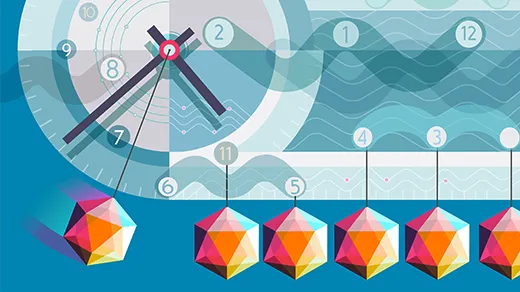
Is Perpetual Motion Possible at the Quantum Level?
A new phase of matter called a “time crystal” plays with our expectations of thermodynamics. The physicist Vedika Khemani talks with Steven Strogatz about its surprising quantum behavior.
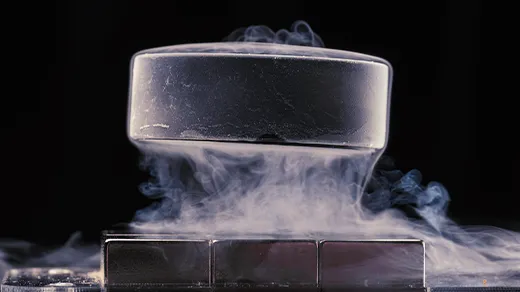
Room-Temperature Superconductor Discovery Meets With Resistance
A paper in Nature reports the discovery of a superconductor that operates at room temperatures and near-room pressures. The claim has divided the research community.